disneys animal kingdom kilimanjaro safaris an immersive wild adventure
Table of Contents
- Overview of Disney’s Animal Kingdom Kilimanjaro Safaris: An Unforgettable Adventure
- Historical Development and Evolution of Kilimanjaro Safaris
- Theming and Design: Crafting a Fictionalized Serengeti
- Ride Mechanics and Technological Innovations
- Major Updates and Expansions Since 2010
- The Wildlife of Kilimanjaro: A Deep Dive into the Animals and Their Habitats
- Categorized Wildlife of Kilimanjaro Safaris: Real-Life Counterparts and Fictional Enhancements
- The Ride Experience: What to Expect on Kilimanjaro Safaris
- Ride Flow: A Journey Through the African Savanna
- Checklist for First-Time Riders: Preparation Essentials
- Sensory Experience: Immersion in the African Wilderness
- Technology Behind the Safari: Engineering the Wild
- Scene-by-Scene Breakdown: The Safari Unfolded
- Comparison Table: Kilimanjaro Safaris vs. Other Disney Rides
Disney’s Animal Kingdom Kilimanjaro Safaris stands as a testament to theme park innovation, blending real wildlife with storytelling to create an experience that transcends traditional amusement rides. Since its debut in 1998, this 3.6-mile open-air safari has transported millions into a fictionalized Serengeti, where animatronic herds thunder past trams alongside real elephants, giraffes, and lions. Unlike conventional zoo visits, Kilimanjaro seamlessly merges education and entertainment, using immersive theming—from the acacia-dotted savanna to the dramatic "Circle of Life" finale—to foster emotional connections with nature.
The attraction’s design draws inspiration from both real African ecosystems and Disney’s legacy of anthropomorphic storytelling, rooted in classics like The Lion King. Behind its seemingly effortless magic lies decades of veterinary care, habitat engineering, and animatronic precision—efforts that have earned it recognition as one of Disney’s most ecologically ambitious projects. Yet beyond its technical marvels, Kilimanjaro’s true power lies in its ability to spark awe: whether through a wildebeest stampede that rattles the tram or a giraffe’s gentle nudge for treats, every encounter feels authentic. This is where guests don’t just observe wildlife—they become part of it.

Overview of Disney’s Animal Kingdom Kilimanjaro Safaris: An Unforgettable Adventure

Disney’s Animal Kingdom Kilimanjaro Safaris stands as a cornerstone of immersive theme park experiences, blending cutting-edge technology, wildlife conservation, and storytelling into a seamless adventure. Since its debut in 1998, the attraction has redefined how guests interact with wildlife, offering a 3.6-mile open-air safari loop that transports them into a fictionalized Serengeti. Designed as Disney’s first fully immersive safari experience, Kilimanjaro Safaris combines live animals, animatronics, and African-inspired landscapes to create an unparalleled sense of authenticity. The attraction’s evolution reflects Disney’s commitment to both entertainment and education, making it a benchmark for animal-themed attractions worldwide.
The theming and design of Kilimanjaro Safaris draw heavily from real-world African ecosystems, particularly the Serengeti Plains and savannas. Every element—from the rustic tram vehicles to the towering baobab trees—has been meticulously crafted to evoke the raw beauty and untamed spirit of the African wilderness. The attraction’s narrative is subtly woven into the environment, with landmarks like the "Circle of Life" scene and the "Great Migration" mural reinforcing Disney’s connection to The Lion King franchise. This fusion of storytelling and ecology creates an experience that feels both educational and magical, appealing to guests of all ages.
Historical Development and Evolution of Kilimanjaro Safaris
Kilimanjaro Safaris originated as a vision to bring Disney’s animated classics to life in a tangible, interactive format. Inspired by the success of The Lion King (1994), Disney Imagineers sought to create an attraction that honored African wildlife while offering a thrilling yet respectful encounter with animals. The project underwent rigorous planning, with Imagineers collaborating with wildlife experts to ensure ecological accuracy and ethical treatment of animals. The attraction officially opened on April 22, 1998, as part of Animal Kingdom’s grand debut, becoming the park’s centerpiece and a global sensation.
Over the years, Kilimanjaro Safaris has undergone significant updates to enhance its immersive qualities and conservation efforts. Early iterations focused on refining the tram route, introducing new animatronics, and expanding animal habitats. One of the most notable milestones occurred in the early 2000s with the addition of the African Harnessed Water Buffalo, a species native to the region, which became a fan favorite. Subsequent updates in the 2010s introduced sleeker tram models, improved audio-animatronic interactions, and dynamic lighting systems to simulate day-night cycles. These changes not only modernized the experience but also deepened its educational value by highlighting real conservation challenges faced by African wildlife.
A timeline of key developments includes: - 1998: Official opening with 12 tram vehicles and 300+ animals across 100 acres. - 2001: Introduction of the wildebeest herd, synchronized to stampede past trams in a choreographed spectacle. - 2004: Expansion of the giraffe feeding station, allowing guests to interact with these gentle giants. - 2010: Upgrade to all-terrain trams with improved suspension for smoother rides. - 2015: Addition of new bird species, including the Lilac-breasted Roller, to enhance biodiversity representation. - 2018: Introduction of seasonal events, such as "Circle of Life: An Environmental Fable," celebrating the attraction’s 20th anniversary. - 2021: Enhancements to audio-animatronic storytelling, including a revised "Circle of Life" scene with interactive elements.
Theming and Design: Crafting a Fictionalized Serengeti
The theming of Kilimanjaro Safaris is a masterclass in environmental storytelling, where every detail—from the texture of the soil to the behavior of the animals—contributes to the illusion of an untouched African savanna. The attraction spans 100 acres and features six distinct habitats, each designed to mimic real-world ecosystems while incorporating Disney’s signature whimsy. The open-air trams, modeled after vintage safari vehicles, traverse a 3.6-mile loop at a leisurely pace, allowing guests to observe animals in what appears to be their natural behavior.
Central to the attraction’s design is the Circle of Life scene, a 40-foot-tall animatronic tree inspired by the iconic sequence from The Lion King. This landmark features a living animatronic lion that reacts to the movement of passing trams, creating a dynamic and unpredictable encounter. The scene is flanked by giant baobab trees and rock formations, all painted in earthy tones to evoke the African landscape. Even the soundtrack, composed by Disney’s Mark Mancina, plays ambient wildlife noises and traditional African rhythms, further immersing guests in the environment.
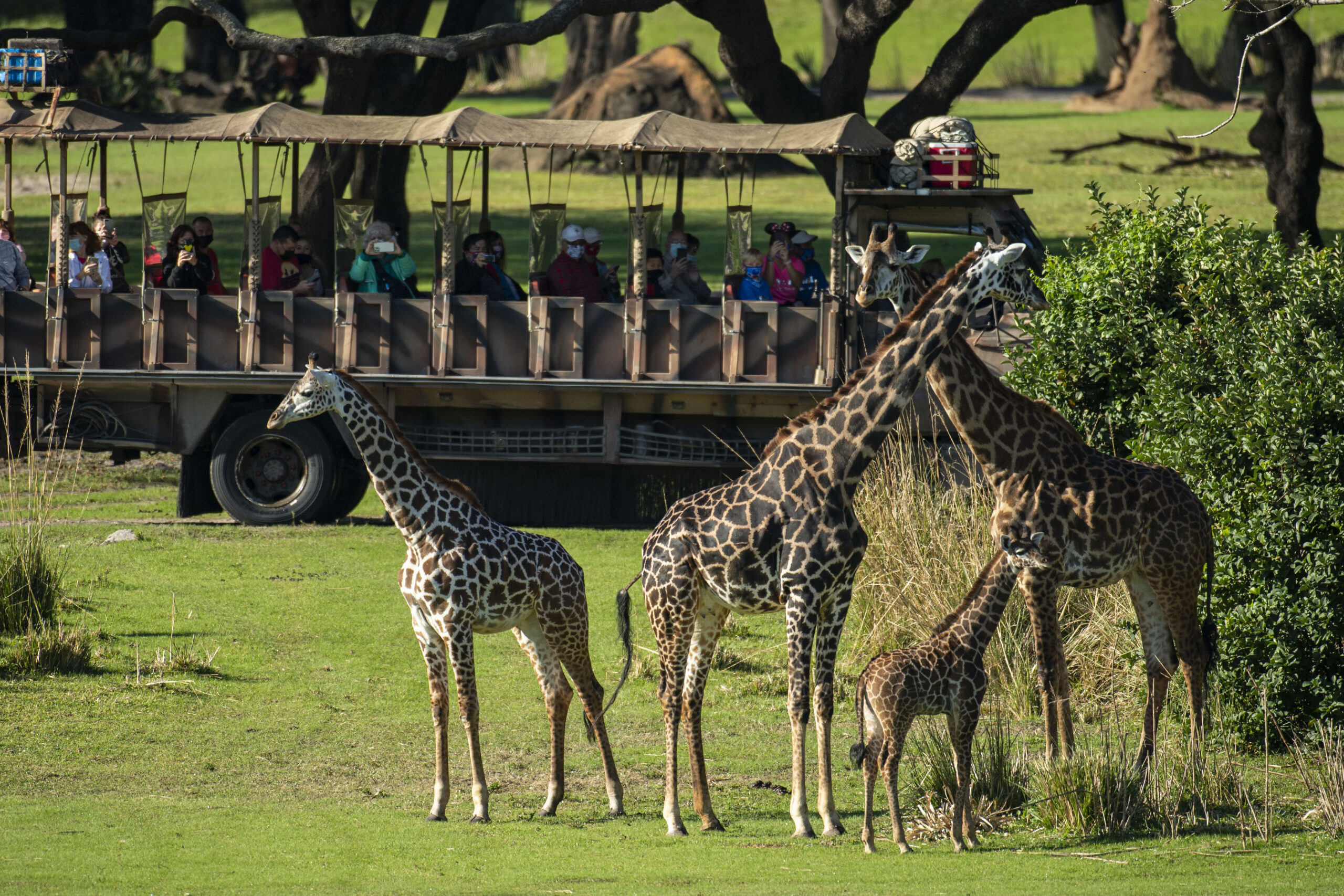
The attraction’s color palette is dominated by ochres, greens, and deep blues, reflecting the savanna’s natural hues. The tram paths are deliberately winding, encouraging guests to slow down and appreciate the details—whether it’s the ostriches strutting near the watering holes or the meerkats perched on termite mounds. The giraffe feeding station, a highlight of the safari, is designed to resemble a traditional African village, complete with thatched-roof huts and wooden railings. Here, guests can feed giraffes from elevated platforms, offering a rare up-close interaction with these majestic creatures.
Ride Mechanics and Technological Innovations
The open-air tram vehicles of Kilimanjaro Safaris are a critical component of the attraction’s success, offering both practicality and immersion. Originally designed with wooden accents and retro styling, the trams have evolved into sleeker, more durable models capable of handling the rugged terrain. Each tram seats eight guests and is equipped with suspension systems to absorb bumps, ensuring a smooth ride even over uneven paths. The trams operate on a closed-loop system, meaning they run continuously without stopping, allowing guests to hop on or off at any time.
The 3.6-mile loop is divided into three distinct zones: 1. The Savanna: Home to wildebeest, zebras, and antelopes, where the famous stampede occurs. 2. The Woodland: Featuring giraffes, warthogs, and birds, with the giraffe feeding station as the centerpiece. 3. The Circle of Life: The climax of the safari, where the animatronic lion and surrounding habitats create a cinematic finale.
One of the most impressive technological features is the animal behavior synchronization system. Using hidden sensors and timers, the attraction’s team coordinates animal movements to ensure that wildebeest stampedes and bird flights happen at optimal times for guest viewing. The audio-animatronics, including the lion in the Circle of Life scene, are controlled by computerized triggers that respond to tram proximity, making each encounter feel spontaneous.
For guests with mobility concerns, Kilimanjaro Safaris offers accessible trams with ramps and priority boarding. The attraction also incorporates subtle sensory elements, such as wind machines to simulate a breeze and mist sprayers near watering holes, enhancing the realism of the environment.
Major Updates and Expansions Since 2010
Since the 2010s, Kilimanjaro Safaris has undergone several transformative updates, each aimed at improving guest experience, animal welfare, and conservation messaging. One of the most significant changes was the replacement of the original trams with new all-terrain models featuring better shock absorption and more durable construction. These upgrades not only improved ride comfort but also extended the lifespan of the trams, reducing maintenance costs and environmental impact.
In 2015, Disney introduced new bird species to the attraction, including the Lilac-breasted Roller and Crowned Crane, which added vibrant colors and enhanced biodiversity. This update was part of a broader initiative to increase the variety of animals while ensuring ethical treatment and naturalistic behaviors. The giraffe feeding station also received an overhaul, with new feeding platforms and interactive signs explaining giraffe anatomy and conservation status.
Seasonal events have become a staple of Kilimanjaro Safaris, with limited-time experiences like "Circle of Life: An Environmental Fable" (2018) and holiday-themed safaris that incorporate storytelling elements. These events often feature special animatronic displays, live performances, and conservation-themed activities, such as scavenger hunts for educational signs.
Another key development was the integration of digital signage along the safari route, providing guests with real-time information about the animals they’re observing, including species facts, conservation status, and habitat details. This technology has made the
The Wildlife of Kilimanjaro: A Deep Dive into the Animals and Their Habitats
Disney’s Animal Kingdom Kilimanjaro Safaris transports guests into the heart of Africa, where the savanna comes alive with the roars of lions, the trumpets of elephants, and the rustling of warthogs. This immersive experience isn’t just a ride—it’s a carefully crafted ecosystem designed to mirror the beauty and complexity of real African wildlife while incorporating Disney’s signature storytelling. Beyond the animatronics and live-action performers, the park houses over 200 animals representing 30 species, blending conservation, education, and entertainment. The habitats are meticulously designed to reflect the geographical and ecological diversity of Africa, from the open grasslands of the savanna to the wooded riverbanks. Each animal, whether real or enhanced for the ride, plays a role in creating an authentic yet magical encounter. The result is a living tapestry where guests can observe real behaviors, from predator-prey dynamics to social hierarchies, all while being guided through the story of The Lion King.
Categorized Wildlife of Kilimanjaro Safaris: Real-Life Counterparts and Fictional Enhancements
Kilimanjaro Safaris features animals grouped by their natural habitats—savanna, woodland, and riverine—each contributing to the ride’s ecological realism. The park collaborates with wildlife experts to ensure accurate depictions, while Disney’s Imagineers add fictional flourishes to enhance the narrative. Below is a breakdown of the species, their real-life counterparts, and how Kilimanjaro Safaris interprets them.
Savanna Dwellers (Open Grasslands and Acacia Woodlands) The savanna is the dominant habitat in Kilimanjaro, home to the ride’s most iconic species. These animals thrive in the dry, open landscapes depicted in the safari, where predators and prey coexist in a delicate balance.
-
African Elephants (Loxodonta africana)
- Real-Life: Highly social herbivores; matriarchs lead herds with complex family structures. Known for long trunks used for communication, drinking, and dust baths.
- Kilimanjaro’s Depiction: Herds are shown in family units near watering holes, with elephants using their trunks to spray water—a behavior seen in real life but amplified for dramatic effect.
- Fun Fact: The elephants in Kilimanjaro are part of a multi-park Disney conservation program, with their movements and health tracked via GPS collars.
-
African Lions (Panthera leo)
- Real-Life: Apex predators with a pride structure led by females; hunt in coordinated groups, primarily at dawn and dusk.
- Kilimanjaro’s Depiction: Features a "tawny lion" animatronic (Simba) alongside live lions in the Pride Lands. Live lions are often seen resting during the day, aligning with their real-life behavior.
- Fun Fact: The lions in Kilimanjaro are part of a breeding program aimed at increasing genetic diversity, with offspring sometimes relocated to other accredited zoos.
-
African Buffalo (Syncerus caffer)
- Real-Life: Highly aggressive herbivores; form tight-knit herds and are known as "black death" due to their unpredictable charges when threatened.
- Kilimanjaro’s Depiction: Herds graze near the tram route, often seen in groups of 10–15, with males displaying their curved horns—a sign of dominance.
- Fun Fact: Buffalo in the park undergo regular dental checks, as their molars wear down over time, requiring special diets to aid digestion.
-
Zebras (Equus quagga)
- Real-Life: Social grazers with striking black-and-white stripes; stripes may help deter biting flies and regulate temperature.
- Kilimanjaro’s Depiction: Herds are scattered throughout the savanna, often seen grazing or drinking at watering holes. Their stripes are slightly more pronounced in the ride’s animations.
- Fun Fact: Zebras in Kilimanjaro are habituated to the safari tram’s sounds through gradual exposure, reducing stress during the ride.
-
Warthogs (Phacochoerus africanus)
- Real-Life: Nocturnal, solitary, or small family groups; known for their distinctive snorting sounds and waddle-like gait.
- Kilimanjaro’s Depiction: Often seen in pairs near termite mounds, where they forage for insects. Their playful behavior is exaggerated for guest engagement.
- Fun Fact: Warthogs in the park are fed a diet rich in fiber to mimic their wild grazing habits, supplemented with vegetables like sweet potatoes.
Woodland and Riverine Species (Forested and Wetland Areas) The edges of Kilimanjaro’s savanna transition into denser woodlands and riverbanks, home to species adapted to shadier, wetter environments. These areas are designed to mimic the transition zones found in African reserves.
-
Reticulated Giraffes (Giraffa camelopardalis reticulata)
- Real-Life: The tallest land animals; browsers with a prehensile tongue (up to 45 cm long) to strip leaves from acacia trees.
- Kilimanjaro’s Depiction: Giraffes are positioned near feeding platforms, where they stretch their necks to reach leaves—mirroring their real-life feeding posture.
- Fun Fact: Giraffes in the park undergo regular joint health assessments, as their unique skeletal structure is prone to arthritis. Low-impact exercises are incorporated into their care.
-
Hippos (Hippopotamus amphibius)
- Real-Life: Semi-aquatic herbivores; spend most of the day in water to cool down and emerge at night to graze.
- Kilimanjaro’s Depiction: A large hippo pond is visible near the river, where hippos are seen partially submerged, leaving only their eyes and nostrils above water.
- Fun Fact: The park’s hippos are fed a diet of grasses and vegetables in the evening to simulate their natural nocturnal grazing patterns.
-
Meerkats (Suricata suricatta)
- Real-Life: Highly social, diurnal animals; live in mobs with complex alarm calls to warn of predators.
- Kilimanjaro’s Depiction: Meerkats are positioned near termite mounds and rocks, often seen standing upright to scan for threats—a behavior known as "sentinel duty."
- Fun Fact: Meerkats in the park participate in environmental enrichment programs, such as puzzle feeders, to stimulate their natural foraging behaviors.
-
Bird Species (e.g., Marabou Storks, African Fish Eagles, Flamingos)
- Real-Life: Play critical roles in the ecosystem; marabou storks are scavengers, while fish eagles hunt near water bodies. Flamingos are migratory and thrive in alkaline lakes.
- Kilimanjaro’s Depiction: Birds are scattered throughout the habitats, with storks perched near water and flamingos in the "Pongu Pongu" area, adding vibrant colors to the landscape.
- Fun Fact: The park’s flamingos are part of a breeding program, with chicks raised in hidden nurseries before being introduced to the public areas.
Animatronics and Fictional Enhancements While the majority of Kilimanjaro’s wildlife is real, Disney incorporates animatronics and live actors to bring
The Ride Experience: What to Expect on Kilimanjaro Safaris
Disney’s Kilimanjaro Safaris transcends the boundaries of traditional theme park attractions by immersing guests in a dynamic, ever-evolving African savanna experience. Unlike static exhibits or linear dark rides, this attraction blends cutting-edge technology with authentic wildlife encounters, creating a multi-sensory journey that evolves with each visit. The ride’s seamless integration of animatronics, live animals, and environmental storytelling ensures no two experiences are identical, making it a cornerstone of Disney’s Animal Kingdom. Understanding the intricacies of the ride flow, sensory details, and technological innovations enhances preparation, allowing guests to fully appreciate the craftsmanship behind this iconic attraction.
Ride Flow: A Journey Through the African Savanna
The Kilimanjaro Safaris experience unfolds over approximately 20–30 minutes, mirroring the unpredictability of a real safari. Guests board open-air trams in a single-file, guided procession, ensuring smooth loading while maintaining the illusion of an authentic expedition. Safety briefings are concise, emphasizing the need to remain seated and avoid sudden movements to protect both guests and wildlife. The route follows a looped path through meticulously designed habitats, each segment triggering a cascade of animatronic and live animal interactions. Key stops include the Circle of Life sequence, a river crossing teeming with hippos and crocodiles, and the open plains, where the legendary wildebeest stampede takes center stage.
The safari’s pacing balances controlled storytelling with spontaneous wildlife encounters, allowing operators to pause for unscripted moments—such as a lion’s roar or a giraffe’s sudden appearance. Guests may disembark early at designated stops, though the full experience is recommended for first-time visitors. The ride’s non-linear structure ensures flexibility, accommodating varying group sizes and ride times while preserving the magic of discovery.
Checklist for First-Time Riders: Preparation Essentials
Proper preparation enhances the Kilimanjaro Safaris experience, particularly for those unfamiliar with the ride’s demands. Attire plays a critical role: guests should wear comfortable, closed-toe shoes (e.g., sneakers or hiking boots) to navigate tram boarding and uneven terrain. Sun protection is vital, with broad-brimmed hats, sunglasses, and light, breathable clothing recommended to combat the Florida sun. Layers are advisable due to temperature fluctuations, as the open-air trams expose riders to air-conditioned interiors and warm savanna breezes.
Timing the ride strategically avoids crowds and extreme weather. Early mornings (rope drop) or late afternoons offer shorter wait times and cooler temperatures, while midday rides risk heat exhaustion and longer queues. Rainy seasons may temporarily suspend the safari, though operators often adjust routes to protect animals. Pro tips include sitting on the left side of the tram for optimal wildebeest views during the stampede and bringing a small hat or umbrella for shade during sunny stretches. Guests with motion sensitivity should note that the ride’s gentle pacing minimizes discomfort, though sudden animal movements (e.g., a charging bull elephant) may startle some riders.
Sensory Experience: Immersion in the African Wilderness
The Kilimanjaro Safaris engages multiple senses, creating a multi-dimensional safari experience that rivals real-world encounters. Sound design is particularly immersive, with recorded animal calls (lion roars, hyena laughter, bird choruses) layered over the tram’s engine hum to simulate a living ecosystem. The distant rumble of thunder during the stampede sequence heightens tension, while the gurgling of the river adds realism to the hippo habitat. Operators occasionally amplify sounds to draw attention to hidden animatronics, such as the flying fish that leap from the water during the river crossing.
Olfactory cues enhance authenticity, with scents of fresh-cut grass, damp earth, and savanna flora wafting through the trams via ventilation systems. The ventilation design also channels a warm, dry breeze during open-air segments, mimicking the African climate. Visually, the ride’s color palette shifts dramatically: the golden savanna glows under the sun, while the blue-green river reflects the sky, creating a striking contrast. Projection mapping in the Circle of Life finale bathes the scene in warm amber and emerald hues, reinforcing the ride’s emotional climax.
Technology Behind the Safari: Engineering the Wild
The safari’s technological prowess lies in its hybrid approach, combining live animals, animatronics, and environmental effects to create a dynamic ecosystem. The electric trams, designed by Disney Imagineering, feature open-air seating with safety barriers and wheelchair-accessible ramps, ensuring inclusivity. Each tram holds up to 36 guests and is equipped with gentle acceleration to minimize discomfort. The vehicles’ open-air design allows natural light and sounds to permeate the experience, while covered sections (e.g., during the stampede) protect riders from sudden weather changes.
Animatronics are a centerpiece of the ride, with hundreds of robotic animals programmed to move realistically. The wildebeest herd, for instance, uses hydraulic systems and motion sensors to create a convincing stampede, with individual animals reacting to the tram’s proximity. Crocodiles and hippos in the river habitat employ submersible animatronics that rise from the water’s surface, while giraffes and zebras use articulated joints for lifelike movements. Projection systems enhance key scenes, such as the flying fish effect during the river crossing, where high-speed LEDs simulate schools of fish leaping above the water.
Scene-by-Scene Breakdown: The Safari Unfolded
The ride’s narrative structure follows a classic safari arc, beginning with exploration, progressing to encounter, and culminating in reflection. The opening sequence sees trams departing the station, passing through lush greenery where ostriches and meerkats populate the surroundings. Guests soon reach the Circle of Life scene, a theatrical tableau featuring animatronic lions, elephants, and giraffes set against a backlit savanna mural. The river crossing introduces hippos and crocodiles, with water effects and submerged animatronics creating a sense of depth.
The great migration sequence is the ride’s emotional peak, where thousands of wildebeest (a mix of animatronics and live animals) surge across the plains. The stampede’s pacing accelerates as the trams near, with sound effects and lighting intensifying the experience. The finale returns to the Circle of Life, where projection-mapped stars and fireflies illuminate the exit, reinforcing the ride’s message of interconnectedness. Each scene is carefully timed to build anticipation, ensuring the safari feels both spontaneous and meticulously crafted.
Comparison Table: Kilimanjaro Safaris vs. Other Disney Rides
The Kilimanjaro Safaris stands apart from other Disney attractions due to its live wildlife integration and non-linear structure. Below is a comparative analysis highlighting key differences:
| Feature | Kilimanjaro Safaris (Animal Kingdom) | Safari at Animal Kingdom (Florida) | Raft Ride (Disneyland) | Jungle Cruise (Magic Kingdom) |
|---|---|---|---|---|
| Ride Type | Open-air tram safari with live animals and animatronics | Open-air tram safari with live animals (no animatronics) | Dark water ride with animatronics and projections | Boat ride with live actors and animatronics |
| Duration | 20–30 minutes (variable) | 15–20 minutes (fixed route) | 12–15 minutes (linear) | 10–12 minutes (linear) |
| Guest Interaction | Observational; operators provide commentary | Observational; minimal commentary | Passive; no interaction | Active; actors engage guests |
Leave a Comment
Comments are moderated before appearing. The data you submit is processed according to the Privacy Policy of Groost.