StMosesTheBlackTransformedSlaveryIntoSainthood
Table of Contents
- St. Moses the Black: A Journey from Slavery to Monastic Asceticism in 4th-Century Egypt
- Early Life and Conversion: From Slavery to Christianity
- Chronological Timeline of St. Moses the Black’s Life and Monastic Contributions
- Historical Sources and Textual Reliability
- St. Moses the Black in the Broader Context of 4th-Century Egyptian Monasticism
- Comparative Analysis: St. Moses the Black and Other Early Christian Ascetics
- Theological and Spiritual Teachings of St. Moses the Black: Humility, Detachment, and the Path of Repentance
- Humility as the Foundation of Spiritual Transformation
- Obedience: The Discipline of Divine Alignment
- Detachment from Worldly Possessions: The Freedom of Poverty
- Repentance and the Dynamics of Spiritual Renewal
- Comparison with Other Desert Fathers: Unique Aspects of St. Moses’s Approach
- In St. Moses the Black in Christian Iconography and Art: A Visual Legacy of Sanctity and Race The depiction of St. Moses the Black in Christian art transcends mere representation—it embodies a complex interplay of racial identity, monastic devotion, and theological symbolism. From the mosaics of Ravenna to the illuminations of Coptic manuscripts, his visual portrayal reflects the early Christian Church’s engagement with diversity, penance, and the universal call to holiness. Unlike many saints whose iconography emphasizes European or Mediterranean features, St. Moses’s black skin became a deliberate and sacred marker of his spiritual journey, challenging contemporary perceptions of race and sanctity. His images often incorporate symbolic elements—such as monastic habits, tools of asceticism, and encounters with wild animals—that reinforce themes of humility, detachment, and the transformative power of repentance. This section explores the evolution of St. Moses’s iconography across Byzantine, Coptic, and medieval Christian traditions, analyzing how artistic conventions and theological interpretations shaped his legacy. Visual Representations Across Byzantine, Coptic, and Medieval Art
- Symbolic Elements in St. Moses’s Iconography
- Comparative Analysis: St. Moses in Eastern Orthodox, Coptic, and Western Depictions
- Modern Reinterpretations: Race, Sainthood, and Inclusivity
- St. Moses the Black’s Influence on Monasticism and Modern Spirituality: Bridging Ancient Asceticism and Contemporary Faith
- St. Moses and the Evolution of Cenobitic Monasticism
- St. Moses in Modern Monastic and Spiritual Movements
- St. Moses and African Diasporic Spirituality: A Legacy of Liberation
- A Timeline of St. Moses’s Revival in Modern Times
- St. Moses’s Teachings on Addiction, Redemption, and Social Justice
- Pilgrimage, Relics, and Devotion to St. Moses the Black: Sacred Sites, Miracles, and Living Traditions
- Sacred Locations Associated with St. Moses’s Life and Death
- Relics of St. Moses the Black and Their Preservation
- Liturgical Celebrations and Feast Days Honoring St. Moses
- Legends of Miracles and Spiritual Interventions
- Modern Pilgrimage Sites and Retreats Honoring St. Moses
- Controversies, Misconceptions, and Modern Reinterpretations of St. Moses the Black
- Historical and Racial Identity Debates
- Critical Reinterpretations by Modern Scholars
- Misrepresentations and Appropriations in Popular Culture
- Comparative Analysis: Hagiography vs. Modern Retellings
- Expert Insights on Presenting St. Moses’s Legacy Today
From the brutal chains of slavery to the hallowed halls of monastic sanctity, the journey of St. Moses the Black stands as a defining narrative of redemption in early Christianity. Born in the 4th century in Egypt, his life defied the constraints of his time—a former bandit turned ascetic, he became one of the most revered Desert Fathers, whose teachings on humility and repentance reshaped monastic traditions. His story, woven through hagiographical texts like the Apophthegmata Patrum, challenges modern perceptions of faith, race, and spiritual transformation, offering a lens into how marginalized voices shaped Christianity’s foundations.
The legacy of St. Moses extends beyond ancient scriptures into the fabric of Christian art, pilgrimage, and contemporary theology. His depictions in Byzantine icons, often marked by dark skin and monastic robes, reflect early Christian ideals of racial inclusivity, while his relics and feast days continue to inspire devotion across denominations. Yet his story is not without controversy—modern scholars debate the accuracy of his hagiographies, and his life has been reinterpreted through the prism of liberation theology, adding layers of complexity to his enduring influence. Today, his teachings resonate in movements addressing addiction, social justice, and the redemption of marginalized communities, proving that his spiritual revolution remains as relevant as ever.

St. Moses the Black: A Journey from Slavery to Monastic Asceticism in 4th-Century Egypt

The story of St. Moses the Black (Apa Moses) stands as one of the most compelling narratives in early Christian monasticism, illustrating the transformative power of faith in the face of oppression and societal rejection. Born in the 4th century, likely in Ethiopia or modern-day Sudan, St. Moses was enslaved and transported to Egypt, where he became a bandit before his dramatic conversion to Christianity. His life reflects the broader spiritual and social upheavals of late Roman Egypt, a period marked by the rapid expansion of monasticism as a response to both personal salvation and the need for communal resistance against cultural and political pressures. Through his radical asceticism and leadership in monastic communities, St. Moses became a symbol of divine grace overcoming human suffering, leaving an enduring legacy in Christian thought and monastic tradition.
Early Life and Conversion: From Slavery to Christianity
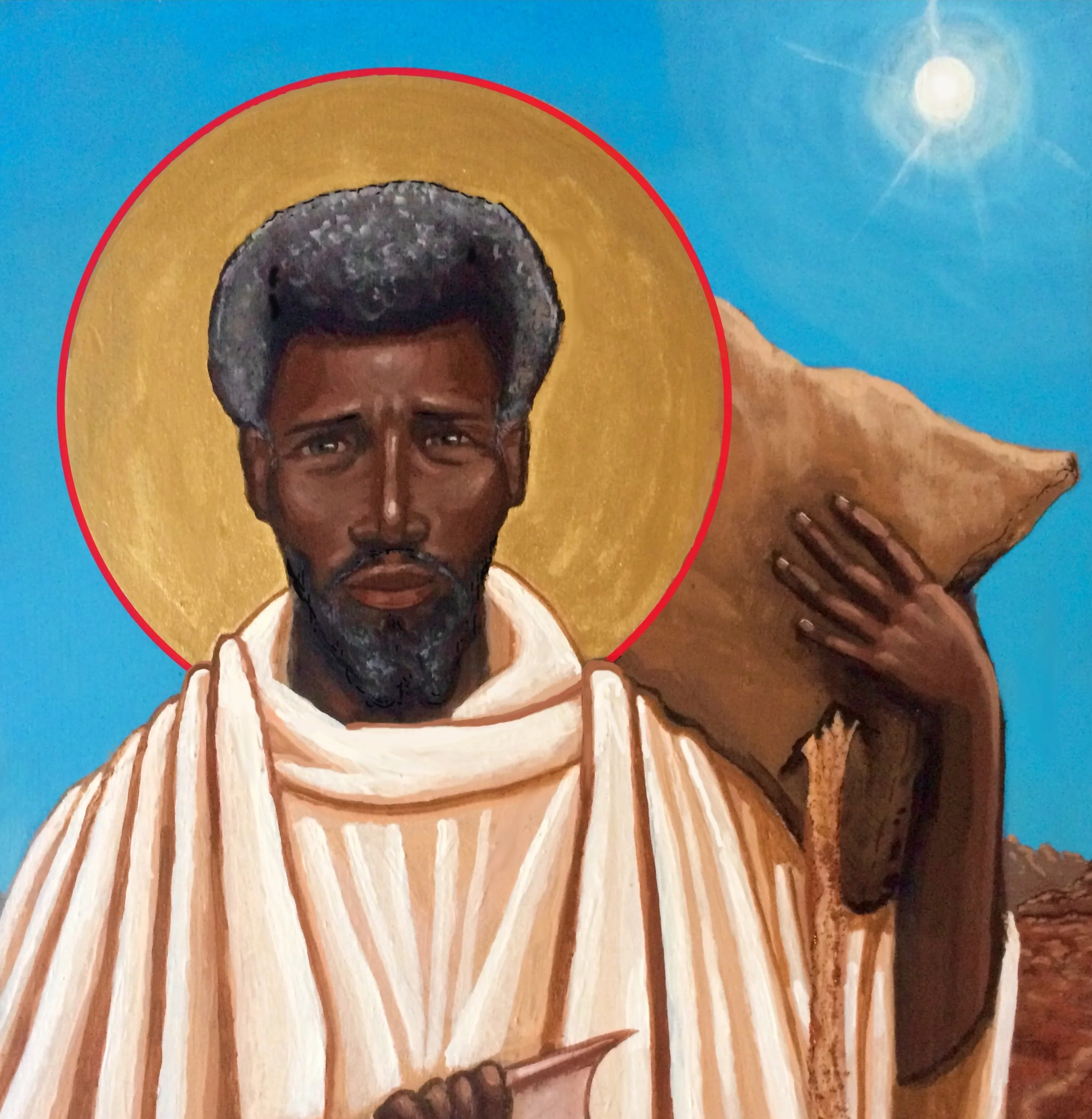
St. Moses the Black’s origins are shrouded in legend, yet historical accounts suggest he was an enslaved Ethiopian or Nubian, forcibly brought to Egypt during the 4th century—a time when slave trade between Africa and the Roman Empire thrived. His early years were defined by violence and criminality; according to hagiographical texts, he was sold into slavery, escaped, and later became a notorious bandit in the desert regions of Egypt. His life took a decisive turn when he encountered a group of Christian monks, whose piety and discipline struck him deeply. The most famous account of his conversion comes from the Apophthegmata Patrum (Sayings of the Desert Fathers), where he reportedly witnessed monks praying and fasting, prompting him to repent. He surrendered to their leader, Abba Isaiah, who baptized him and initiated him into monastic life. This transformation marked the beginning of his ascetic journey, which would redefine his identity from a feared outlaw to a revered spiritual figure.
The Life of St. Moses attributed to St. Jerome further elaborates on his conversion, describing how Moses initially resisted monastic discipline but eventually embraced it with fervor. His conversion aligns with the broader 4th-century trend of former outcasts—slaves, prostitutes, and criminals—finding redemption through monasticism, a phenomenon that reflected the Church’s emphasis on divine mercy and the radical equality of all believers in Christ.
Chronological Timeline of St. Moses the Black’s Life and Monastic Contributions
St. Moses the Black’s life can be reconstructed through a combination of hagiographical texts, monastic traditions, and archaeological evidence, though exact dates remain speculative. Below is a chronological outline of key events:
- Early 4th Century: Born in Ethiopia or Nubia, enslaved, and transported to Egypt. His early life involved criminal activities, including banditry in the desert regions.
- Circa 350–360 CE: Conversion to Christianity after encountering monks, likely in the Nitrian Desert or Scetis. Baptized and initiated into monastic life under Abba Isaiah.
- 360–380 CE: Joined the monastic community at Scetis (Wadi Natrun), known for its strict ascetic practices. His reputation as a disciplined and charismatic monk grew, earning him the title Apa Moses (Father Moses).
- 380–390 CE: Established his own monastic cell in the Kellia region, further south in the desert. His ascetic rigor—including prolonged fasting, manual labor, and spiritual combat—became legendary.
- Late 4th Century: Recognized as a spiritual leader and elder (geronta) in the monastic movement. His teachings were recorded in the Apophthegmata Patrum, where his sayings emphasize humility, repentance, and the struggle against demonic temptations.
- Death and Legacy: Exact date unknown, but his death is traditionally placed in the late 4th or early 5th century. His feast day is celebrated on April 28th in the Coptic Orthodox Church and September 28th in the Eastern Orthodox tradition.
St. Moses’s life spanned a critical period in monastic history, coinciding with the rise of organized monasticism in Egypt. His activities during the 360s–390s CE placed him at the heart of the desert fathers’ movement, a time when monasticism was evolving from solitary hermits to structured communities.
Historical Sources and Textual Reliability
The primary sources documenting St. Moses the Black’s life are the Apophthegmata Patrum (compiled in the 7th century but containing earlier sayings) and the Life of St. Moses attributed to St. Jerome, though its authenticity is debated. The Apophthegmata Patrum presents Moses’s teachings as concise, often paradoxical sayings designed to provoke spiritual reflection. For example:
“A brother asked Abba Moses, ‘What must I do to please God?’ The old man said to him, ‘Do not accept anything from anyone, and you will be pleasing to God.’”
Scholars assess these texts with caution, recognizing that hagiographical accounts often blend historical facts with theological symbolism. The Life of St. Moses by Jerome, while influential, may contain embellishments to emphasize moral lessons. However, the consistency of his teachings across multiple sources—such as the emphasis on humility, labor, and spiritual warfare—suggests a core of historical accuracy.
The reliability of these texts is further supported by their alignment with contemporary monastic practices. St. Moses’s asceticism mirrors the ideals of early desert monks, who saw physical hardship as a means to purify the soul. His story also reflects the 4th-century Church’s growing interest in documenting monastic lives as models of Christian virtue.
St. Moses the Black in the Broader Context of 4th-Century Egyptian Monasticism
St. Moses the Black’s life must be understood within the context of 4th-century Egypt, a region undergoing profound religious and social transformations. The rise of Christian monasticism in this era was driven by several factors:
- Spiritual Renewal: Monasticism offered an alternative to the increasingly worldly Roman Empire, emphasizing detachment from material possessions and dedication to God.
- Social Marginalization: Former slaves, outcasts, and criminals—like St. Moses—found in monasticism a path to redemption and social acceptance.
- Political and Economic Instability: The decline of Roman authority in Egypt created a power vacuum, allowing monastic communities to flourish as autonomous spiritual entities.
- Theological Debates: Monasticism became a battleground for Christian identity, with figures like St. Anthony the Great and St. Pachomius establishing models of asceticism that would shape early Christianity.
St. Moses’s contributions were particularly significant in the development of cenobitic (communal) monasticism, though he is often associated with the more solitary eremitic tradition. His leadership in the Kellia region highlights the decentralized nature of early monasticism, where isolated cells and communities coexisted under loose hierarchical structures.
The architectural and spiritual landscape of Egypt during this period was dominated by desert monasteries such as Scetis (Wadi Natrun) and Kellia, where St. Moses is believed to have lived. These sites were not merely places of worship but symbols of resistance against the Roman world. The Kellia, for instance, was a network of small cells scattered across the desert, reflecting the ideal of solitude and self-sufficiency. The ruins of these monasteries—such as the whitewashed walls of Scetis—serve as tangible reminders of St. Moses’s era, where monks lived in simplicity, engaging in manual labor, prayer, and spiritual combat.
Comparative Analysis: St. Moses the Black and Other Early Christian Ascetics
St. Moses the Black’s contributions to monasticism can be contextualized through a comparison with other pivotal figures of the era, such as St. Anthony the Great and St. Pachomius. Below is a table highlighting their key differences and similarities:
| Aspect | St. Moses the Black | St. Anthony the Great | St. Pachomius | |||||||||||||||||||||||||||||||||||||||||||
|---|---|---|---|---|---|---|---|---|---|---|---|---|---|---|---|---|---|---|---|---|---|---|---|---|---|---|---|---|---|---|---|---|---|---|---|---|---|---|---|---|---|---|---|---|---|---|
| Background | Former slave and bandit; Ethiopian or Nubian origin. | Wealthy Egyptian nobleman who renounced worldly life after hearing the Gospel. | Egyptian soldier who converted to Christianity and
Theological and Spiritual Teachings of St. Moses the Black: Humility, Detachment, and the Path of RepentanceThe spiritual legacy of St. Moses the Black (c. 330–405 AD) stands as a luminous testament to the transformative power of radical humility and unyielding repentance within early Christian asceticism. As a former slave turned anchorite, his teachings—preserved primarily in the Apophthegmata Patrum (Sayings of the Desert Fathers)—offer a profound meditation on the interior life, where worldly chains are shattered through divine grace and human effort. St. Moses’s emphasis on obedience to God, detachment from material possessions, and the relentless pursuit of spiritual renewal reflects a synthesis of biblical imperatives and the emerging monastic ethos of 4th-century Egypt. His sayings, often terse yet profound, reveal a theology rooted in the conviction that true freedom lies in surrender to Christ, not in the rejection of suffering but in its redemptive embrace. This section explores the core tenets of his spiritual philosophy, its theological implications, and its enduring influence on Christian mysticism.Humility as the Foundation of Spiritual TransformationSt. Moses’s teachings on humility transcend the mere avoidance of pride; they present it as the active dismantling of the self’s illusions of autonomy. Unlike the Gnostic rejection of the material world, his humility is grounded in incarnational theology—the belief that salvation is achieved through the embodied struggle against sin. His sayings frequently depict him as a man who, despite his elevated spiritual stature, insisted on seeing himself as the "greatest of sinners." This paradox—being both a saint and a sinner—mirrors the patristic understanding of theosis (deification), where human perfection is not the eradication of sin but its continual conquest through divine cooperation. A striking example is his response to a brother who praised his ascetic labors: > "I am not a monk; I am only a sinner. If I were a monk, I would not be proud of my labors, for I know that all my good deeds come from God, and all my sins from myself." This saying encapsulates two critical themes: first, the rejection of self-attribution for virtue, which aligns with St. Paul’s admonition (1 Corinthians 4:7) that "what do you have that you did not receive?"; and second, the acknowledgment of sin as an ever-present reality, even in the holiest of lives. Such humility was not masochistic self-flagellation but a recognition of human limitation—a cornerstone of early monastic psychology. St. Moses’s approach contrasts with the more intellectualized humility of figures like Evagrius Ponticus, who framed it as a battle against logismoi (thoughts), whereas Moses’s humility is experiential, rooted in the felt reality of one’s brokenness.Obedience: The Discipline of Divine AlignmentFor St. Moses, obedience was not blind submission to an authority but the active alignment of the will with God’s, mediated through the monastic community. His teachings on obedience often revolve around the theme of kenosis (self-emptying), drawing from Christ’s example in the Gospel of Philip ("The Son is the perfect Man, for he is the Father’s self-revelation"). A pivotal anecdote illustrates this: > "A brother asked Abba Moses, ‘What must I do to please God?’ The old man said to him, ‘Go, sit in your cell, and your cell will teach you everything.’" This response underscores the primacy of praktike (ascetic practice) over theoretical knowledge. Obedience, in his view, was not about performing rituals but about cultivating a heart attuned to God’s will—a process facilitated by solitude, silence, and the guidance of a spiritual father. His insistence on obedience extended even to seemingly menial tasks, such as fetching water or sweeping the monastery. As he once remarked: > "Obedience is the mother of all virtues. Without it, no one can attain perfection." This teaching resonates with the Rule of St. Benedict’s later emphasis on obedience as the first step toward humility, though Moses’s approach was more spontaneous and less institutionalized. His obedience was also corrective—he frequently subjected himself to harsh penances when he sensed spiritual laxity, embodying the Desert Fathers’ belief that discipline must be proportional to one’s perceived sinfulness.Detachment from Worldly Possessions: The Freedom of PovertySt. Moses’s radical rejection of material attachments was not an end in itself but a means to achieve apatheia (impassivity)—a state of inner freedom from worldly distractions. His famous saying reflects this: > "A man who loves money will never be free from sin, for he will always be anxious about it. But a man who despises money will be free to love God." This teaching aligns with the Gospel’s call to the rich young ruler (Matthew 19:21) but radicalizes it within the monastic context. Unlike the early Christian communities that practiced communal ownership (e.g., the Didache), St. Moses’s detachment was individualized—each monk was to renounce personal property entirely, trusting in divine providence. His approach differed from that of St. Anthony the Great, who saw poverty as a tool for spiritual warfare, whereas Moses framed it as a state of being. He often admonished his disciples: > "Do not store up treasures on earth, for where your treasure is, there your heart will be also. But if your heart is with God, you will have no need for earthly things." This saying echoes Matthew 6:19–21 but adds a monastic twist: detachment is not just about avoiding wealth but about reorienting the heart toward God. His teachings on poverty also addressed the practical challenges of monastic life, such as the temptation to hoard food or tools. He once told a brother who had secretly kept extra bread: > "You have not given it to the poor, and now you are storing it for yourself. This is not detachment; this is theft from God."Repentance and the Dynamics of Spiritual RenewalSt. Moses’s theology of repentance (metanoia) was dynamic, emphasizing continuous transformation rather than a one-time conversion. His approach was deeply influenced by the biblical narrative of the prodigal son (Luke 15), where repentance is portrayed as a lifelong journey. He often compared the spiritual life to a furnace—one must be continually refined by suffering and penance to remove impurities. A key example is his response to a brother who asked how long one must repent: > "Repentance has no end. Even when you reach heaven, you will still be repenting, for there is always more to learn about God’s will." This teaching reflects the Desert Fathers’ understanding of repentance as an eschatological process, extending into eternity. Unlike the Western medieval concept of penance (often tied to sacramental absolution), St. Moses’s repentance was experiential—it involved tangible acts of self-denial, such as fasting, vigil, and manual labor. His sayings frequently describe repentance as a battle, where the enemy is not external but the passions within: > "The devil does not care if you sin in thought, word, or deed. He only wants you to remain in your sin, for then you will not seek God." This aligns with the patristic doctrine of synergism—the cooperation between human effort and divine grace. St. Moses’s repentance was not passive but required active resistance to temptation, a theme later developed by St. John Climacus in The Ladder of Divine Ascent.Comparison with Other Desert Fathers: Unique Aspects of St. Moses’s ApproachWhile St. Moses shared core ascetic principles with contemporaries like St. Anthony or St. Pachomius, his emphasis on immediate, experiential spirituality set him apart. Unlike Anthony, who saw solitude as a means to prepare for communal leadership, Moses embraced solitude as an end in itself—a radical withdrawal to encounter God directly. His teachings also differed from Pachomius’s structured coenobitic model; Moses’s monasticism was eremitical yet communal in spirit, valuing the relationship with a spiritual father over institutional rules. A notable contrast is his relationship with anger—a passion he addressed with brutal honesty. While many Desert Fathers preached patience, Moses acknowledged anger as a universal struggle and offered a pragmatic solution: > "If you are angry with your brother, go and make peace with him before the sun sets. For if you do not, the devil will take advantage of your anger and lead you into sin." This practical approach reflects his pastoral sensitivity, distinguishing him from more theoretical ascetics like Evagrius, who categorized anger as one of the eight deadly thoughts (logismoi) to be combated through intellectual discernment.In
|
| Element | Byzantine (Eastern Orthodox) | Coptic | Medieval Western Catholic |
|---|---|---|---|
| Skin Tone | Deep brown/black, naturalistic; contrast with lighter saints in mosaics. | Bold, exaggerated darkness; often with stylized Egyptian features (broad nose, coiled hair). | Dark but sometimes "softened" to avoid racial starkness; blended with "exotic" saint types. |
| Attire | Dark pallium and tunic; occasional mitre if depicted as a bishop. | Rough-spun tunic, shaved head; sometimes a simple rope belt (symbolizing poverty). | Monastic habit with European stylistic influences (e.g., tighter folds, lighter fabric). |
| Symbolic Objects | Wooden cross, palm frond, occasionally a book or model church. | Burning bush, tamed animals (lions, wolves), tools of labor (hammer, anvil). | Scroll, book, or stylized cross; fewer tools of labor. |
| Facial Expression | Serene, elongated face; downcast eyes (humility). | Fierce or intense gaze; strong jawline (ascetic strength). | Mild, contemplative; less racial distinctiveness. |
| Context in Artworks | Mosaics (Ravenna), frescoes in monasteries; often in processional scenes. | Illuminated manuscripts (Synaxarium), wall paintings in Upper Egyptian churches. | Psalters, hagiographical cycles; rare, often marginalized. |
| Theological Emphasis | Universal monastic ideal; racial identity as divine will. | Local African Christian heritage; resistance to Roman cultural dominance. | Exoticism; secondary to European saints. |
Modern Reinterpretations: Race, Sainthood, and Inclusivity
In contemporary Christian art and theology, St. Moses theSt. Moses the Black’s Influence on Monasticism and Modern Spirituality: Bridging Ancient Asceticism and Contemporary Faith
The life of St. Moses the Black (c. 330–405 AD) transcends the boundaries of his 4th-century Egyptian context, resonating deeply within the evolution of Christian monasticism and modern spiritual movements. His journey from slavery to monastic leadership under St. Pachomius laid the foundation for cenobitic monasticism, a communal form of monastic life that prioritized collective discipline, prayer, and labor. Beyond his immediate influence, St. Moses’s teachings on humility, racial reconciliation, and spiritual redemption have inspired later monastic orders, African diasporic Christianity, and even contemporary struggles for social justice. His legacy demonstrates how ancient asceticism can address modern crises, from addiction to systemic oppression, making him a pivotal figure in both historical and contemporary Christian spirituality. St. Moses’s impact on monasticism is most evident in the Pachomian system, the first organized cenobitic rule in Christianity. Unlike earlier eremitic (hermit) traditions, Pachomius’s model emphasized communal living, shared property, and structured daily routines—principles St. Moses embodied after his conversion. His leadership in the Pachomian monasteries, particularly in Tabennesi, showcased how former slaves and marginalized individuals could become pillars of spiritual authority. This model later influenced Basil of Caesarea’s monastic rules and, centuries later, the Benedictine and Trappist orders, which adopted communal living as a core tenet. Even the Eastern Orthodox monastic tradition, with its emphasis on hesychasm (interior stillness) and communal prayer, reflects St. Moses’s legacy of integrating diverse backgrounds into a unified spiritual path.St. Moses and the Evolution of Cenobitic Monasticism
The Pachomian monasteries, founded in the 4th century, became a blueprint for organized monastic life, and St. Moses’s role within them was transformative. Unlike earlier ascetics who retreated into solitude, Pachomius’s communities required members to live under a shared rule, submit to a superior, and engage in manual labor alongside prayer. St. Moses, as a former slave turned abbot, demonstrated that redemption through discipline was accessible to all, regardless of social status. His leadership in Kellia, one of the most influential Pachomian monasteries, highlighted how cenobitic life could foster spiritual equality—a radical idea in a society stratified by race and class. The Benedictine Order, founded by St. Benedict of Nursia in the 6th century, drew directly from Pachomian principles, including communal stability (stabilitas), obedience, and ora et labora (prayer and work). The Trappist monks, a Cistercian reform movement of the 17th century, further emphasized silence, solitude, and manual labor, ideals that trace back to St. Moses’s ascetic rigor. In the Eastern Orthodox Church, the Studion Monastery in Constantinople and later Mount Athos communities adopted Pachomian-inspired structures, where monks from diverse ethnic and social backgrounds lived under a common rule. St. Moses’s influence is also seen in the Franciscan and Dominican orders, which, while not strictly cenobitic, embraced communal apostolic life—a principle rooted in his example of service beyond the monastery.St. Moses in Modern Monastic and Spiritual Movements
St. Moses’s legacy persists in contemporary monasticism, particularly among orders that prioritize social justice and racial reconciliation. The Trappist monks of Gethsemani Abbey in Kentucky, for instance, have cited St. Moses as an inspiration for their interracial communities and engagement with civil rights struggles. Father Thomas Keating, a Trappist monk and founder of Contemplative Outreach, often referenced St. Moses’s life as a model of transformation through suffering, emphasizing how his story resonates with modern seekers of inner peace amid external chaos. In the Eastern Orthodox Church, St. Moses is venerated as a patron of the oppressed, particularly in African diasporic communities. The Antiochian Orthodox Christian Archdiocese and Ethiopian Orthodox Tewahedo Church have integrated his feast day (April 28) into their liturgical calendars, framing him as a symbol of liberation. The Black Monastic Movement in the U.S., emerging in the late 20th century, explicitly draws on St. Moses’s example to reclaim monasticism as a tool for racial healing. Monks and nuns in this movement, such as those at St. Gregory’s Abbey in Shawnee, Oklahoma, cite his life as proof that monasticism need not be exclusive but can instead be a path for marginalized voices.St. Moses and African Diasporic Spirituality: A Legacy of Liberation
St. Moses’s story has become a cornerstone of African American spirituality, particularly within liberation theology and Black Christian nationalism. Theologians like James Cone and J. Kameron Carter have highlighted St. Moses as a counter-narrative to white supremacist interpretations of Christianity, arguing that his life challenges the notion that sanctity is reserved for the socially elite. In Black churches, his feast day is often marked with sermons on redemption, resistance, and racial reconciliation, with pastors like Rev. Dr. William J. Barber II invoking his example in Moral Mondays movements. The African Methodist Episcopal (AME) Church and National Baptist Convention have incorporated St. Moses into their hymnals and liturgical readings, particularly during Lent, as a figure who embodies the struggle and triumph of the oppressed. Contemporary Black monastic communities, such as the Community of the Transfiguration in Washington, D.C., follow a Pachomian-inspired rule, blending ancient monasticism with modern activism. Their abbot, Fr. Gabriel Salguero, has stated:"St. Moses teaches us that monasticism is not about escaping the world but about transforming it. His life shows that the most radical act of faith is to take the pain of slavery—and any form of oppression—and turn it into a source of healing for others."
A Timeline of St. Moses’s Revival in Modern Times
St. Moses’s influence has been selectively revived and reinterpreted across centuries, adapting to the spiritual and social needs of each era. Below is a chronological overview of key moments in his modern legacy:| Period | Context | Significance |
|---|---|---|
| Late 19th–Early 20th Century | Black Christian Nationalism (U.S.) | Figures like Alexander Crummell and Henry McNeal Turner referenced St. Moses in sermons advocating for Black self-determination and monastic-like communal living in Black settlements (e.g., Liberia, Freedmen’s towns). |
| 1960s–1970s | Civil Rights and Black Power Movements | St. Moses was invoked by Black theologians (e.g., Howard Thurman) as a symbol of resistance, with his life used to frame nonviolent protest as a spiritual discipline. The Student Nonviolent Coordinating Committee (SNCC) drew parallels between his struggle and their own. |
| 1980s–Present | Black Monastic and Contemplative Renewal | Orders like the Community of the Transfiguration and Black Benedictines emerged, explicitly modeling their rules on St. Moses’s life. His feast day is now celebrated in Orthodox and Catholic Black parishes, often paired with reparations discussions and addiction recovery programs. |
| 2010s–Present | Global African Diaspora and Social Justice | St. Moses’s story is featured in interfaith dialogues (e.g., Black Lives Matter and Christian clergy collaborations) and 12-step recovery programs (e.g., Celebrate Recovery), where his path from slavery to sanctity is used as a metaphor for breaking cycles of addiction and systemic injustice. |
St. Moses’s Teachings on Addiction, Redemption, and Social Justice
St. Moses’s life offers a powerful framework for addressing modernPilgrimage, Relics, and Devotion to St. Moses the Black: Sacred Sites, Miracles, and Living Traditions
The life and legacy of St. Moses the Black transcend historical records, manifesting in tangible devotion through pilgrimage sites, sacred relics, and liturgical traditions that span continents and centuries. From the arid landscapes of Egypt to modern monasteries in the Americas, his presence endures as a beacon of faith, racial reconciliation, and monastic asceticism. Devotees journey to locations steeped in his story—whether to seek healing, spiritual renewal, or a deeper connection to the African Christian heritage—while relics attributed to him serve as focal points of veneration. Liturgical celebrations, hymns, and legends of miracles further cement his role as a saint whose intercession is both sought after and celebrated across Orthodox, Coptic, and Ethiopian Christian traditions.Sacred Locations Associated with St. Moses’s Life and Death
The geographical markers of St. Moses’s life are deeply intertwined with the monastic communities of 4th-century Egypt, particularly in the Nitrian Desert and the region of Scetis (modern-day Wadi Natrun). Historical accounts, primarily from the Life of St. Moses attributed to St. Jerome, describe his journey from slavery in Cappadocia to asceticism in Egypt, where he became a revered figure in the monastic desert. Key locations include:Relics of St. Moses the Black and Their Preservation
Relics attributed to St. Moses the Black are rare but deeply revered, often housed in monasteries and churches that serve as custodians of his spiritual heritage. While no comprehensive inventory exists, fragments of his bones, personal items, or objects associated with his life are venerated in the following contexts:Liturgical Celebrations and Feast Days Honoring St. Moses
St. Moses the Black is commemorated in the liturgical calendars of the Coptic Orthodox, Ethiopian Orthodox, and some Oriental Orthodox Churches, with feast days and hymns reflecting his themes of repentance, racial unity, and monastic discipline. Key elements of his liturgical veneration include:> *"O Moses, black as the earth yet radiant as the sun, > You who exchanged chains for Christ’s yoke, > Pray that we may cast off pride and don humility’s garment."* >These hymns are sung during Vespers or Matins, reinforcing his role as a model of spiritual transformation.
Legends of Miracles and Spiritual Interventions
Stories of miracles attributed to St. Moses the Black are woven into oral traditions, hagiographies, and modern testimonies, illustrating his perceived intercessory power. While some legends lack historical verification, their persistence underscores his enduring spiritual influence. Notable accounts include:Modern Pilgrimage Sites and Retreats Honoring St. Moses
Today, pilgrimage to St. Moses the Black is a global phenomenon, with sites ranging from ancient monasteries to modern retreats designed to foster spiritual growth and racial healing. Below are key locations where his legacy is actively celebrated:Controversies, Misconceptions, and Modern Reinterpretations of St. Moses the Black
The veneration of St. Moses the Black as an Ethiopian ascetic and saint intersects with complex historical debates about race, slavery, and the reliability of hagiographical sources. While traditional accounts portray him as a model of humility and repentance, modern scholarship scrutinizes these narratives through critical lenses, uncovering tensions between spiritual idealization and historical accuracy. Questions persist regarding the authenticity of his racial identity, the circumstances of his enslavement, and the political motivations behind his canonization. These controversies reflect broader challenges in reconciling ancient religious traditions with contemporary understandings of marginalization, justice, and cultural representation. The hagiographical tradition of St. Moses the Black, primarily documented in the Life of St. Moses the Black by St. Jerome, blends spiritual edification with historical ambiguity. Critics argue that Jerome’s account—written in the late 4th century—may have been influenced by theological agendas rather than factual reporting. The text describes Moses as an Ethiopian slave in Rome who, after a life of crime, underwent a dramatic conversion under the guidance of St. Paphnutius. However, historical inconsistencies, such as the anachronistic depiction of Ethiopian Christians in Rome during that era, have led scholars to question the narrative’s veracity. Some posit that Moses’s story may have been allegorical, serving as a moral exemplar rather than a biographical record.Historical and Racial Identity Debates
The racial and ethnic identity of St. Moses the Black has been a subject of scholarly debate, particularly in relation to the broader context of early Christian interactions with sub-Saharan Africans. Traditional hagiography labels him as an Aethiops, a term used in antiquity to describe people from the Horn of Africa or Nubia, but modern historians caution against oversimplifying this classification. The term Aethiops could encompass a spectrum of identities, including enslaved individuals from diverse regions, complicating efforts to pinpoint Moses’s exact origins."The term 'Ethiopian' in early Christian texts is fluid and often carries more symbolic than geographic weight, reflecting the era’s limited understanding of African diversity." — Dr. John H. Thompson, Professor of Early Christian Studies, University of OxfordScholars like Robert Wilken and Elizabeth Key Fox suggest that Moses’s story may have been shaped by the theological discourse of the time, particularly the contrast between paganism and Christian virtue. The emphasis on his African descent in hagiographical texts could also serve a didactic purpose, illustrating the universality of salvation beyond ethnic or social boundaries. However, this framing has been critiqued for reinforcing stereotypes of Africans as either "savages" in need of redemption or exotic figures in Christian narratives.
Critical Reinterpretations by Modern Scholars
Contemporary historians and theologians employ critical methodologies to reinterpret St. Moses’s legacy, particularly through the lenses of race studies, slavery, and postcolonial theory. Works such as Anthony Grafton’s The Footnote: A Curious History and Elizabeth Key Fox’s The Christianization of the Barbarians examine how early Christian writers constructed narratives of conversion and identity. These studies highlight how St. Moses’s story was not merely a personal testament but a product of its historical context, reflecting the Roman Empire’s social hierarchies and the Church’s evolving relationship with marginalized groups. A key reinterpretation emerges from the study of slavery in late antiquity. While St. Moses is often presented as a willing ascetic, modern scholars argue that his enslavement—whether literal or metaphorical—was a central aspect of his spiritual journey. David Brondos in Slavery and the Early Church suggests that Moses’s story resonates with the experiences of enslaved Christians in the Roman world, offering a subversive narrative of liberation through faith. This perspective aligns with contemporary discussions on restorative justice, framing Moses’s life as a critique of systemic oppression rather than a passive acceptance of his status.Misrepresentations and Appropriations in Popular Culture
St. Moses the Black’s story has been selectively appropriated in popular culture, often stripped of its historical and theological complexities. In literature, his figure appears in works like Henry Adams’s Mont-Saint-Michel and Chartres, where he is depicted as a symbol of the "mysterious East" rather than a historical individual. More recently, Toni Morrison’s Paradise and Edward P. Jones’s The Known World engage with themes of racial identity and redemption, though they do not directly reference Moses. These works reflect a broader trend of reimagining African and enslaved figures in Christian narratives, sometimes at the expense of historical accuracy. In religious discourse, St. Moses has been invoked to support various agendas, from anti-slavery movements to modern racial reconciliation efforts. However, his portrayal often oscillates between romanticization and erasure. For instance, some conservative Christian circles emphasize his asceticism while downplaying the brutality of slavery, whereas progressive interpretations highlight his story as a call to action against systemic injustice. This duality underscores the challenges of presenting a figure whose legacy straddles both spiritual idealism and historical trauma.Comparative Analysis: Hagiography vs. Modern Retellings
The contrast between traditional hagiographical accounts and modern reinterpretations reveals shifting priorities in how St. Moses is understood. While St. Jerome’s Life focuses on moral transformation and divine intervention, contemporary retellings—such as Michael O. Emerson’s academic works on race and religion or Ta-Nehisi Coates’s essays on legacy—center on themes of resistance and agency. For example, Coates’s exploration of ancestry in Between the World and Me implicitly engages with the idea of inherited suffering and redemption, a theme resonant with Moses’s story."The hagiographical Moses is a figure of conversion; the modern Moses is a figure of confrontation—with history, with power, and with the self." — Dr. Yvette M. Christian, Associate Professor of Religious Studies, University of VirginiaAcademic biographies, such as John Moschos’s Pratum Spirituale (6th century), further complicate the narrative by framing Moses within a broader context of ascetic saints. These texts often emphasize his racial otherness as a testament to God’s inclusive grace, a perspective that modern scholars critique as potentially exoticizing. In contrast, fictional works like Colson Whitehead’s The Underground Railroad (while not directly about Moses) recontextualize enslaved figures as active agents in their liberation, aligning with contemporary reinterpretations of Moses’s agency.
Expert Insights on Presenting St. Moses’s Legacy Today
Theologians and historians emphasize that presenting St. Moses’s legacy today requires balancing reverence with critical engagement. Dr. Vincent L. Wimbush, a leading scholar on early Christian asceticism, argues that Moses’s story should be taught as a "living document" that invites dialogue on race, power, and redemption. He notes that modern audiences often struggle with the juxtaposition of Moses’s enslavement and his eventual sanctity, leading to either discomfort or oversimplification."We cannot separate Moses’s sanctity from his blackness or his enslavement. To do so is to repeat the very erasures that his story seeks to challenge." — Dr. Vincent L. Wimbush, Professor of Religious Studies, Florida State UniversityCultural critics, such as Cornel West, draw parallels between St. Moses’s journey and contemporary movements for racial justice. West argues that Moses’s life offers a template for "prophetic witness"—a commitment to truth-telling and systemic change—rather than passive acceptance of suffering. This perspective aligns with modern monastic traditions, where figures like Thomas Merton have reinterpreted asceticism as a form of resistance against injustice.
St. Moses the Black’s life is more than a historical account; it is a testament to the power of repentance, the subversion of oppression, and the universal call to spiritual renewal. His transformation from a slave and criminal to a saint exemplifies how faith can transcend earthly constraints, offering a model for modern struggles with identity, justice, and redemption. As his legacy continues to inspire monks, theologians, and activists alike, St. Moses stands not just as a figure of the past but as a living symbol of hope—one whose story challenges us to reexamine the boundaries of holiness and the possibilities of human transformation.
Leave a Comment
Comments are moderated before appearing. The data you submit is processed according to the Privacy Policy of Groost.